Coarse vs. Fine Thread Screws
Thread pitch decides grip: coarse threads bite deep into soft, fibrous material, while fine threads pack more engagement into hard, dense stock. Use the wrong one and screws strip, split, or back out — match the thread to the material and the joint holds.
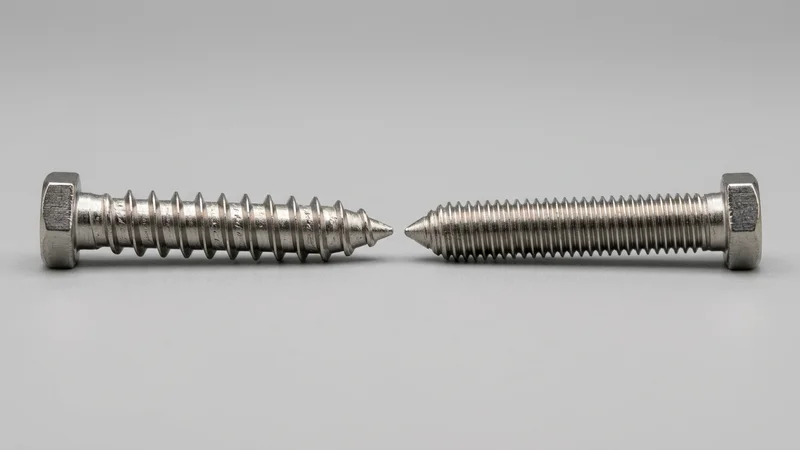
| Feature | Coarse Thread Screws | Fine Thread Screws |
|---|---|---|
| Thread pitch | Wide, deep threads (fewer per inch) | Narrow, shallow threads (more per inch) |
| Grip in softwood & plywood | Excellent — deep bite in fibers | Poor — strips out easily |
| Grip in hardwood | Good, but can split near edges | Excellent — more engagement, less splitting |
| Metal, plastic & MDF edges | Too aggressive — strips and cracks | The right choice — controlled bite |
| Pilot hole | Often optional in softwood | Usually required |
| Driving speed | Fast — advances quickly per turn | Slower — more turns to seat |
| Under vibration | Can back out over time | Holds better (more thread engaged) |
| Best for | Softwood framing, plywood, drywall on wood studs | Hardwood, metal, drywall on steel studs |
Verdict
Shop This Comparison
- Coarse-thread construction screw assortment — softwood, plywood, framing
- Fine-thread screw assortment — hardwood, metal, machine threads
Affiliate links — we may earn a commission at no cost to you.
Also in the toolbox
- Brad-point drill bit set — clean pilot holes that protect threads
- Countersink bit set — seats flat heads flush without splitting
FAQ
What is the difference between coarse and fine drywall screws?
Coarse-thread (W-type) drywall screws are for wood studs — the deep threads grip softwood fibers. Fine-thread (S-type) screws are for steel studs — the tighter threads bite into thin metal without stripping. Coarse screws in steel studs is the classic DIY mistake.
Can I use coarse-thread screws in hardwood?
You can, but pre-drill: coarse threads wedge hardwood fibers apart and split boards near edges. Fine-thread or purpose-made hardwood screws engage more gently — with a pilot hole either way near any edge.
Do pocket-hole screws come in coarse and fine thread?
Yes — Kreg and others sell both. Coarse for softwoods and plywood, fine for hardwoods. Same rule as every other screw: match the thread to the material density.