Cotter Pin
Pins · split pin · cotter key
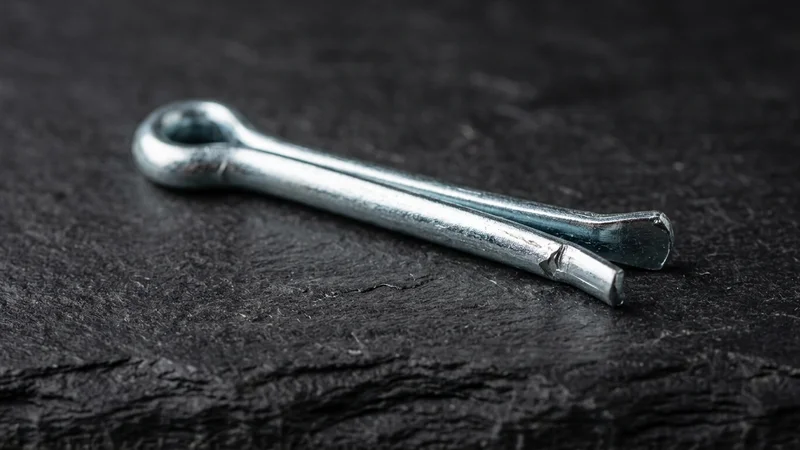
Definition: A cotter (split) pin is a doubled wire pin inserted through a hole and bent back over itself to retain a clevis pin, castle nut, or shaft end.
Anatomy & Schematic
■ Shank■ Chamfered ends
Governing standards: ASME B18.8.1 · ISO 1234
Common Sizes
| Inch | Metric | Head width | Head height |
|---|---|---|---|
| 1/16 | 1.6 mm | 0.063–0.078 hole | 1 long |
| 3/32 | 2.4 mm | 0.094–0.109 hole | 1-1/2 long |
| 1/8 | 3.2 mm | 0.125–0.141 hole | 2 long |
Representative sizes. Full dimensional data lives in the standards listed below.
Grades & Strength
| Grade | Material | Tensile (psi) | Marking |
|---|---|---|---|
| Steel | zinc-plated steel | — | None |
| Stainless | 304 stainless | — | None |
Materials
- Zinc-plated steel
- Stainless steel
- Brass
Pros & Cons
Pros
- Cheap and visual — easy to inspect
- Works in many diameters
- No tools beyond pliers
Cons
- Single-use in practice (bending fatigues the wire)
- Can shear under high load
- Vibrates out if the legs break
Typical Uses
- Retaining castle nuts
- Securing clevis pins
- Trailer hitches
- Machinery shafts
Alternatives & Related
- Clevis Pin — The pivot pin a cotter pin retains
- Shoulder Bolt — A precision pivot for applications needing axial retention
Where to Buy
Affiliate links — we may earn a commission at no cost to you.
FAQ
Cotter pin vs clevis pin — what is the difference?
A clevis pin is the load-bearing pivot pin with a cross-hole; a cotter pin is the small split pin that goes through that hole to keep the clevis pin from sliding out.
Can you reuse a cotter pin?
Not reliably. The legs work-harden and crack when re-bent. They are cheap — replace them, especially on anything safety-critical.