Galvanized vs. Stainless Steel Screws
Both fight rust, but they fight differently: galvanized screws wear a zinc shield that eventually sacrifices itself, while stainless screws are corrosion-resistant all the way through. The right choice depends on exposure, lifespan, and budget — pick wrong and you either overpay or rebuild.
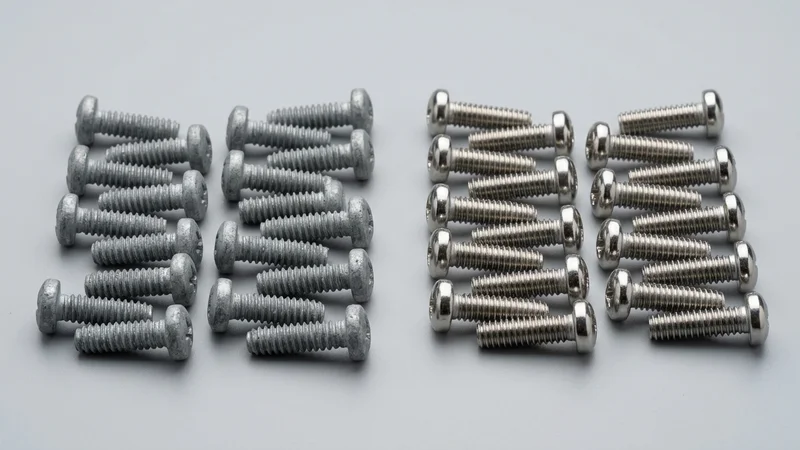
| Feature | Galvanized Screws | Stainless Steel Screws |
|---|---|---|
| How it resists rust | Zinc coating sacrifices itself to protect the steel | Chromium forms a self-healing passive layer |
| Lifespan outdoors | 5–15 years, depending on coating weight and climate | Decades — often outlasts the wood |
| Coastal / salt water | Poor — salt consumes zinc fast | 316 stainless is the standard for salt exposure |
| Cost | Cheapest corrosion-resistant option | 2–4x the price of galvanized |
| Wood staining | Can bleed gray/black streaks on cedar and redwood | No staining |
| Strength notes | Full range including structural grades | Slightly softer; galling possible in large sizes |
| Best for | Fences, framing, sheltered outdoor joints on a budget | Decks, docks, coastal work, build-it-once projects |
Verdict
Shop This Comparison
- Hot-dip galvanized exterior screws — the budget side of this comparison
- 304 stainless steel screw assortment — the build-it-once side
Affiliate links — we may earn a commission at no cost to you.
Also in the toolbox
- 18V impact driver kit — drives coated and stainless screws cleanly
FAQ
Can I mix galvanized and stainless steel screws?
Avoid direct contact between them in wet environments — dissimilar metals form a galvanic cell that consumes the zinc faster. In practice, keep each joint to one metal and you will be fine.
Is 304 or 316 stainless better for screws?
316 adds molybdenum for salt-water resistance and is the right choice within sight of the ocean or around pools. Inland, 304 performs identically for most projects at a lower price.
Why are stainless screws more likely to snap?
Some stainless alloys are less ductile than hardened carbon steel, and stainless threads can gall (cold-weld) under friction. Pre-drill, drive at moderate speed, and rub wax on the threads in dense hardwoods.