Molly Bolt
Anchors · molly anchor · hollow wall anchor
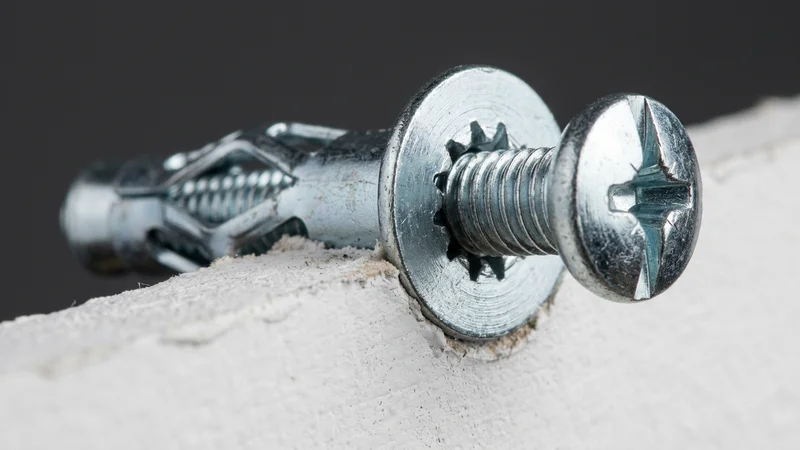
Definition: A molly bolt is a slotted-sleeve hollow-wall anchor. Tightening the screw collapses the sleeve into legs that clamp against the back of the wallboard.
Anatomy & Schematic
■ Head■ Shank■ Threads■ Point
Governing standards: Manufacturer-rated (no universal standard)
Common Sizes
| Inch | Metric | Head width | Head height |
|---|---|---|---|
| #6 | M3.5 | — | 1/2 wall |
| #8 | M4 | — | 1/2–5/8 wall |
| #10 | M5 | — | 5/8–3/4 wall |
Representative sizes. Full dimensional data lives in the standards listed below.
Grades & Strength
| Grade | Material | Tensile (psi) | Marking |
|---|---|---|---|
| Steel | zinc-plated steel | — | None |
| Stainless | stainless steel | — | None |
Materials
- Zinc-plated steel
- Stainless steel
Pros & Cons
Pros
- Screw is removable without losing the anchor
- Good grip in drywall and plaster
- No large pilot hole needed
Cons
- Lower capacity than a toggle bolt
- Sleeve must match the wall thickness
- Can spin if over-tightened in worn holes
Typical Uses
- Shelves on drywall
- Curtain rods and blinds
- Medium-weight fixtures
- Plaster and hollow walls
Alternatives & Related
- Toggle Bolt — Higher capacity for heavy loads
- Drywall Anchor — Cheaper for light loads
Where to Buy
Affiliate links — we may earn a commission at no cost to you.
FAQ
Molly bolt vs toggle bolt — which is stronger?
A toggle bolt is stronger because its wings spread over a much larger area. A molly bolt is easier to work with because the screw comes out without losing the anchor.
How do you install a molly bolt?
Drill a hole matched to the sleeve, tap the molly flush, tighten the screw until the sleeve legs seat against the back, then remove the screw, hang the fixture, and reinstall.