Plow Bolt
Bolts · plough bolt · countersunk square neck bolt · grader blade bolt
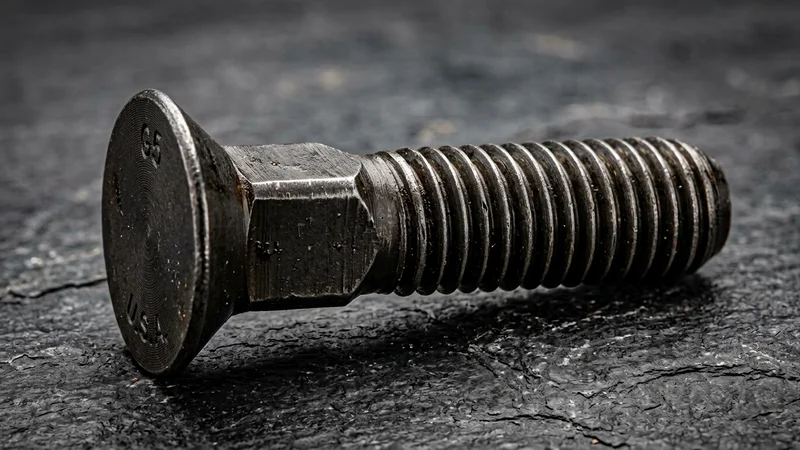
Definition: A plow bolt has a flat, countersunk head and a square neck, designed to sit flush while the square neck bites into the plate to stop the bolt from turning.
Anatomy & Schematic
■ Head■ Shank■ Threads■ Point
Governing standards: ASME B18.9 · Manufacturer specified
Common Sizes
| Inch | Metric | Head width | Head height |
|---|---|---|---|
| 5/16-18 | M8 | 5/8 | — |
| 1/2-13 | M12 | 7/8 | — |
| 3/4-10 | M20 | 1-1/4 | — |
Representative sizes. Full dimensional data lives in the standards listed below.
Grades & Strength
| Grade | Material | Tensile (psi) | Marking |
|---|---|---|---|
| Grade 5 | medium carbon steel, Q&T | 120,000 | 3 radial lines |
| Grade 8 | alloy steel, Q&T | 150,000 | 6 radial lines |
Materials
- Zinc-plated steel
- Plain steel
- Stainless steel
Pros & Cons
Pros
- Flush, snag-free head
- Square neck stops rotation
- Hardened for wear applications
Cons
- Countersink must be machined
- Harder to find than hex bolts
- Recess collects debris
Typical Uses
- Plow shares and sweeps
- Grader and dozer blades
- Cutting edges
- Wear plates
Alternatives & Related
- Carriage Bolt — Domed head square-neck bolt for wood
- Hex Bolt — Standard wrench-tightened bolting
Where to Buy
Affiliate links — we may earn a commission at no cost to you.
FAQ
What is a plow bolt?
A countersunk-head bolt with a square neck used on plow shares, grader blades, and wear plates — the flush head sheds soil and the square neck locks rotation.
Plow bolt vs carriage bolt?
Both have a square neck, but a plow bolt head is flat and countersunk for metal wear edges; a carriage bolt has a rounded dome head for wood.