Split Rivet
Rivets · bifurcated rivet · split shank rivet
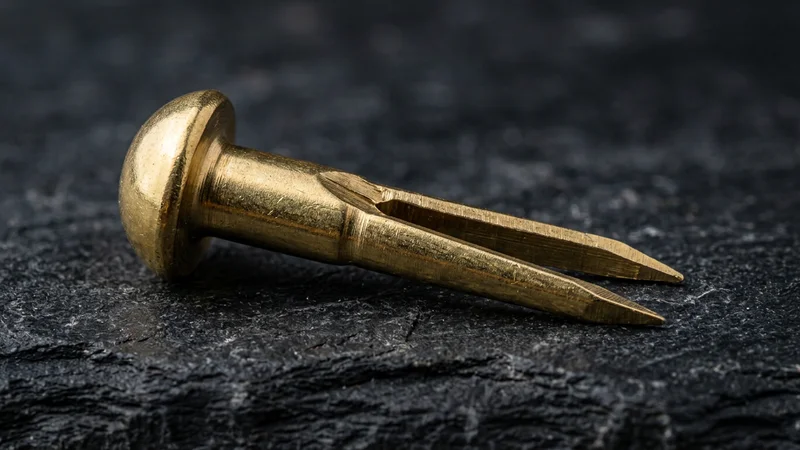
Definition: A split rivet has a shank split into two legs that curl outward when set, gripping soft materials like leather, fabric, and wood.
Anatomy & Schematic
■ Head■ Shank■ Threads■ Point
Governing standards: Manufacturer specified (no universal standard)
Common Sizes
| Inch | Metric | Head width | Head height |
|---|---|---|---|
| 1/8 | M3 | — | 3/16 to 5/8 long |
| 3/16 | M5 | — | 1/4 to 1 long |
| 1/4 | M6 | — | 3/8 to 1-1/2 long |
Representative sizes. Full dimensional data lives in the standards listed below.
Grades & Strength
| Grade | Material | Tensile (psi) | Marking |
|---|---|---|---|
| Steel | steel | — | None |
| Brass / copper | varies | — | None |
Materials
- Steel
- Brass
- Copper
Pros & Cons
Pros
- Grips soft materials well
- No through-hole threading needed
- Cheap and traditional look
Cons
- Legs can tear thin fabric
- Lower strength
- Visible legs on the back
Typical Uses
- Leatherwork
- Canvas and fabric
- Wood assemblies
- Light furniture
Alternatives & Related
- Solid Rivet — Smooth permanent joint in harder materials
- Compression Rivet — Cleaner finish in soft goods
Where to Buy
Affiliate links — we may earn a commission at no cost to you.
FAQ
What is a split rivet?
A rivet whose shank splits into two legs that curl over when set, gripping leather, canvas, and wood.
How do you set a split rivet?
Push the legs through the material, then bend them outward with a hammer or setting tool until they curl flat against the back.