Structural Screw
Screws · structural wood screw · ledger screw · timber screw · GRK / Simpson SD (brands)
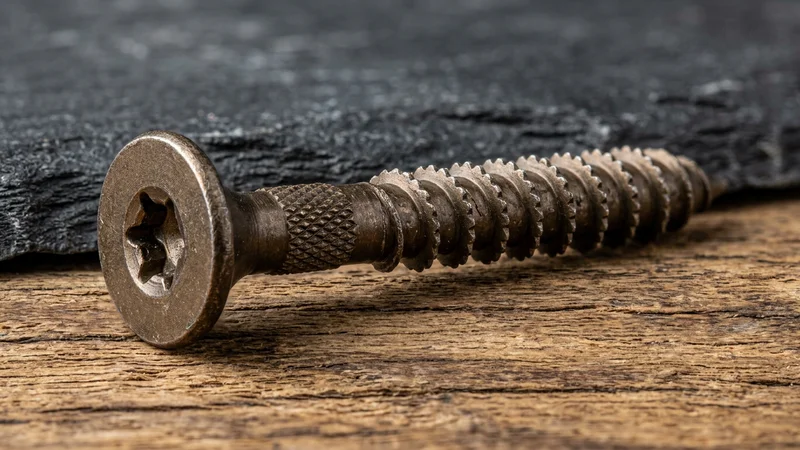
Definition: A structural screw is an engineered, high-strength wood screw designed to replace lag bolts and through-bolts in structural connections such as ledgers, framing, and decking.
Anatomy & Schematic
■ Head■ Shank■ Threads■ Point
Governing standards: ICC-ES AC233 / AC257
Common Sizes
| Inch | Metric | Head width | Head height |
|---|---|---|---|
| #9 | 4.5 mm | hex washer | 1-1/2 to 4 long |
| #10 | 5 mm | hex washer / flat | 1-1/2 to 5 long |
| #14 | 6 mm | hex washer | 2 to 6 long |
Representative sizes. Full dimensional data lives in the standards listed below.
Grades & Strength
| Grade | Material | Tensile (psi) | Marking |
|---|---|---|---|
| Coated carbon steel | case-hardened steel + coating | 150,000+ | ICC-ES evaluated |
| Stainless | stainless steel | — | For treated lumber |
Materials
- Case-hardened coated steel
- Stainless steel
Pros & Cons
Pros
- Often needs no pilot hole
- Higher shear strength than a lag bolt
- Faster with an impact driver
Cons
- More expensive than lags
- Must be rated for the connection (check the ESR)
- Needs the correct driver bit
Typical Uses
- Deck ledgers and framing
- Beam and post connections
- Stair stringers
- Replacing lag bolts and carriage bolts
Alternatives & Related
- Lag Bolt — Traditional heavy wood fastening
- Carriage Bolt — Through-bolted connection with a nut
Where to Buy
Affiliate links — we may earn a commission at no cost to you.
FAQ
Structural screw vs lag bolt?
A structural screw is stronger in shear, installs faster, and usually needs no pilot hole. A lag bolt is cheaper and familiar. Check the code evaluation report for the specific connection.
What size structural screw for a deck ledger?
Follow the manufacturer chart — commonly #10 or 1/4 in diameter through the ledger into the rim board. Spacing and pattern come from the deck code.