Best Anchors for Plaster & Lath Walls
Plaster over wood lath is thicker, harder, and crumblier than drywall — so drywall anchors fail in it. Self-drilling anchors crack the plaster, and small plugs spin in the oversized holes old walls need. Old-house walls need anchors that grip the lath or spread behind it.
What to Look For
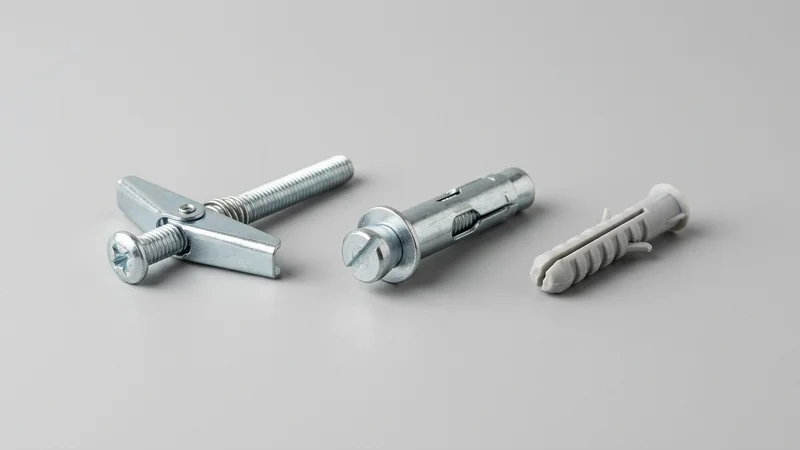
- Grip the lath, not the plaster: the wood strips behind the plaster are the real strength.
- Weight tiers: light loads on plugs, medium on mollies, heavy on toggles — with wide margins for crumbly walls.
- Pre-drill everything: never hammer or self-drill into plaster — drill a clean pilot hole with a masonry bit.
- Avoid self-drilling drywall anchors: their threads crack and crumble plaster instead of biting.
Top Picks
1. TOGGLER SnapToggle heavy-duty toggle bolts For heavy loads
A steel channel spreads the load across the back of the lath — the strongest option for TVs, shelves, and radiators on old walls.
Check price on Amazon →2. Molly bolt kit with setting tool For medium loads
The sleeve mushrooms behind the lath for a secure grip on mirrors, curtain rods, and cabinets.
Check price on Amazon →3. Ribbed plastic wall plugs For light loads
Drill a clean hole, tap in a plug, and hang pictures and small fixtures — cheap and reliable in sound plaster.
Check price on Amazon →What to Avoid
Avoid
- Self-drilling (zip-style) drywall anchors — they crack plaster and pull out.
- Hammering anything directly into plaster — drill every hole.
- Adhesive strips on heavy items — old plaster dust defeats the adhesive.
Also in the toolbox
- Stud finder with deep-scan mode — finds studs through thick plaster
- Carbide masonry drill bit set — clean holes without cracking plaster
FAQ
Why do drywall anchors fail in plaster walls?
Plaster is harder and more brittle than drywall, and the wall is thicker with a gap behind it. Self-drilling anchors crack the plaster instead of threading in, and small plugs cannot expand properly in the oversized, crumbly holes old walls produce.
Can I hang a TV on a plaster wall?
Yes — ideally into studs with lag screws. Where there is no stud, use heavy-duty toggles rated well above the TV weight, and spread the load across multiple anchors.
How do I find studs behind plaster and lath?
Use a deep-scan stud finder — standard sensors get confused by dense plaster and wood lath. Old-house studs are often true 2x4s on irregular spacing, so verify with a small pilot hole before committing.
What is a zip toggle — and does it work in plaster?
“Zip toggle” usually means a strap-style toggle like the TOGGLER SnapToggle: a steel channel on plastic straps that cinches tight behind the wall. It is one of the best heavy-duty options for plaster and lath because the channel spreads load across the lath instead of point-loading crumbly plaster.
Keep Reading
Affiliate links — we may earn a commission at no cost to you.