Best Fasteners for Cabinet Installers
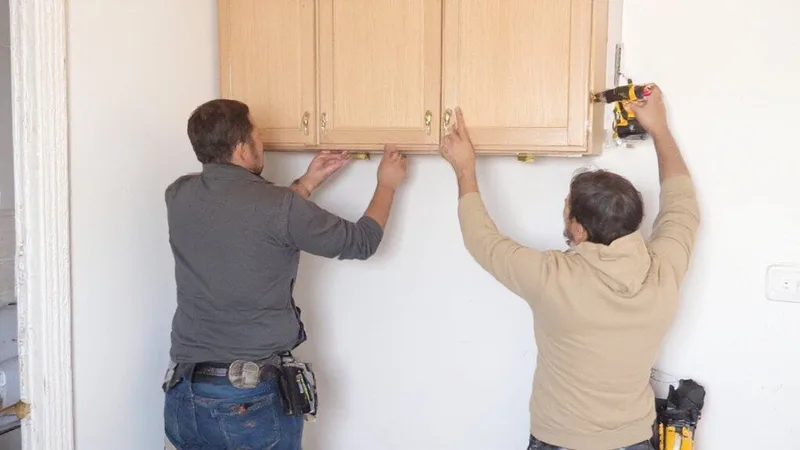
Cabinet installers hang hundreds of pounds on a wall and join boxes so the seams disappear: long cabinet screws driven into studs, washer-head screws that join frameless boxes without pull-through, trim-head screws that vanish into face frames, and pocket-hole screws that build carcasses. Drywall screws need not apply — they snap under cabinet loads.
What to Look For
- #8 cabinet screws, 2-1/2 to 3 in, into every stud — two per stud, the hanging connection everything depends on.
- Washer-head screws for joining frameless boxes — wide heads that clamp without pulling through 3/4 in sides.
- Trim-head screws for face frames — tiny heads that countersink and fill invisible.
- Pocket-hole screws matched to the stock — coarse thread for plywood carcasses, fine for hardwoods.
- Heavy-duty toggles for floating vanities and off-stud mounts — rated anchors where no stud exists.
Top Picks
1. GRK cabinet screws, #8 x 2-3/4 in Best overall
The installer favorite — self-tapping, star drive, washer head option, and strong enough to hang loaded uppers on two screws per stud. No pre-drilling in most hardwoods.
Check price on Amazon →2. Washer-head screws, #8 x 1-1/4 in, square drive Best for frameless boxes
Wide washer heads clamp frameless sides together with zero pull-through — the 1-1/4 in length joins 3/4 in stock perfectly. Square drive stays on the bit inside the box.
Check price on Amazon →3. Kreg pocket-hole screws, 1-1/4 in coarse thread Best for carcasses
The standard carcass screw for 3/4 in plywood — coarse threads grip ply, the washer head seats in the pocket, and the square drive never strips at an angle.
Check price on Amazon →4. TOGGLER Snaptoggle heavy-duty anchors, 1/4-20 Best off-stud
Floating vanities, islands, and uppers that miss the studs need real anchors — Snaptoggles hold hundreds of pounds in 1/2 in drywall where plastic anchors fail.
Check price on Amazon →What to Avoid
Avoid
- Drywall screws for hanging cabinets — brittle and unrated; they snap under sustained cabinet loads.
- Round or pan heads where they show — countersunk flat and trim heads with fillers look professional; bumps look cheap.
- Skipping pre-drills near face-frame ends — hardwood face frames split; a quick pilot saves the stile.
- Fine thread in plywood, coarse in hardwood — match the thread to the stock or joints loosen and strip.
Also in the toolbox
- Cabinet installation claws — aligns and clamps face frames hands-free
- Countersink bit set — perfect seats for trim and flat heads
- 12V impact driver kit — drives cabinet screws without wrist strain
FAQ
What screws do you use to hang kitchen cabinets?
#8 cabinet screws 2-1/2 to 3 in long, two per stud through the hanging rail — self-tapping star or square drive, washer head if the rail holes are oversized. Pre-drill the rail and drive into the center of each stud.
Can you hang cabinets with drywall screws?
Never for hanging — drywall screws are brittle, unrated for shear, and snap under sustained loads. They are fine for temporary positioning and non-structural shop jigs, but cabinets hang on proper cabinet or structural screws.
What size pocket-hole screws for 3/4 in plywood?
1-1/4 in coarse-thread pocket-hole screws — the length seats fully in 3/4 in stock without poking through. Use fine thread only when joining hardwoods like oak and maple.
How do you join frameless cabinets together?
Clamp the boxes flush, then drive 1 to 1-1/4 in washer-head screws through the sides — typically hidden behind hinges or under shelves. Pre-drill to prevent blowout and keep the faces perfectly aligned.
Keep Reading
- Pocket Hole Screw
- Wood Screw
- Structural Screw
- Toggle Bolt
- What Size Screws for Kitchen Cabinets
- Best Drywall Anchors
Affiliate links — we may earn a commission at no cost to you.