Best Fasteners for Drywall Contractors
Drywall contractors buy screws by the bucket and anchors by the box: coarse-thread screws for wood studs, fine-thread for steel, collated strips for the auto-feed gun — plus the heavy-duty toggles and self-drilling anchors that turn finished drywall into load-bearing wall. The screw schedule is simple; the anchor choice is where jobs are won.
What to Look For
- Coarse-thread screws for wood studs, fine-thread for steel — matched threads bite without stripping.
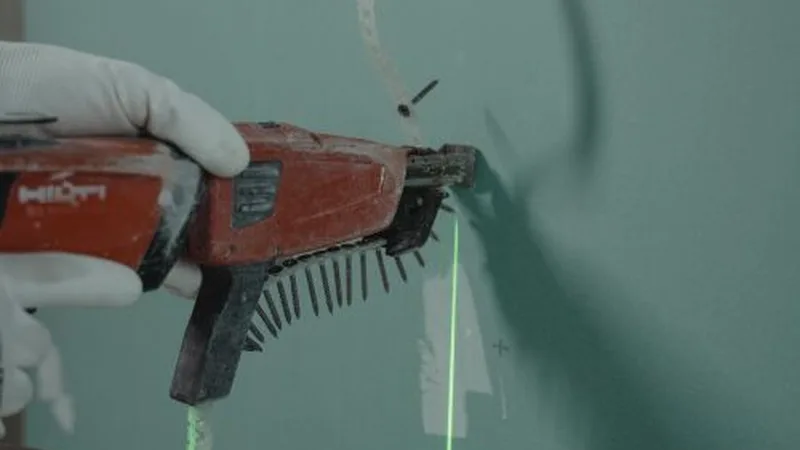
- Collated screws plus an auto-feed gun for production hanging — hand-driving is for patches, not houses.
- Snaptoggle-style heavy-duty toggles for TVs, grab bars, and cabinets on finished drywall — the strongest option short of a stud.
- Self-drilling zinc anchors for medium loads — shelves, mirrors, and towel bars with no pre-drilling.
- Screw length that buries 5/8 in into the stud past the drywall — 1-1/4 in for 1/2 in board, 1-5/8 in for 5/8 in.
Top Picks
1. Coarse-thread drywall screws, #6 x 1-1/4 in, 5 lb box Best overall
The bucket every drywall crew burns through — bugle heads that dimple without tearing, coarse threads that bite wood studs fast, priced for thousand-square jobs.
Check price on Amazon →2. TOGGLER Snaptoggle heavy-duty anchors, 1/4-20 Best heavy-duty anchor
The forum and pro consensus for serious weight on drywall — a steel channel spreads load behind the board for hundreds of pounds of holding power, removable and reusable.
Check price on Amazon →3. E-Z Ancor Twist-N-Lock drywall anchors, 50-pack Best medium anchor
Self-drilling zinc anchors that install with a plain screwdriver — the fast answer for shelves, curtain rods, and everything between a nail and a toggle.
Check price on Amazon →4. Fine-thread drywall screws, #6 x 1-1/4 in Best for steel studs
Fine threads grip thin steel without stripping out — the correct screw for commercial metal-stud framing and basement steel track.
Check price on Amazon →What to Avoid
Avoid
- Wood screws for hanging board — flat heads tear paper where bugle heads dimple cleanly.
- Screws too long for the assembly — points poking past the stud hit wire, pipe, and the other side of the wall.
- Overdriving past the paper — a screw that tears the face has zero holding power; set the depth and trust it.
- Cheap plastic anchors for anything heavy — they spin, crack, and pull out; step up to self-drilling or toggles.
Also in the toolbox
- Auto-feed collated screw gun — hangs a room in the time hand-driving takes a wall
- Drywall dimpler bit set — perfect depth on every screw, no tears
- Jab saw — cutouts for boxes, can lights, and anchor retrofits
FAQ
What is the difference between coarse and fine thread drywall screws?
Coarse threads bite fast into soft wood studs; fine threads grip thin steel studs without stripping. Wood framing gets coarse, metal framing gets fine — using the wrong one means stripped holes or screws that never seat.
How long should drywall screws be?
Long enough to bury at least 5/8 in into the stud: 1-1/4 in screws for standard 1/2 in drywall, 1-5/8 in for 5/8 in fire-rated board, and 2 in or longer for double-layer assemblies.
What is the best drywall anchor for a wall-mounted TV?
A Snaptoggle-style heavy-duty toggle rated well above the TV weight — or better, two of them spread across the mount. Ordinary plastic and self-drilling anchors are not rated for dynamic loads like articulating mounts.
Why do drywall screws pop out over time?
Usually lumber shrinkage or missed studs — the framing moves and pushes the screw head through the mud. The fix is driving a fresh screw an inch above and below the pop into solid wood, then re-mudding.
Keep Reading
- Drywall Screw
- Drywall Anchor
- Toggle Bolt
- Wood Screw
- Best Drywall Anchors
- What Size Screws for Drywall (1/2 vs 5/8)
Affiliate links — we may earn a commission at no cost to you.