Captive Screw
Screws · captive panel screw · captive fastener · retained screw
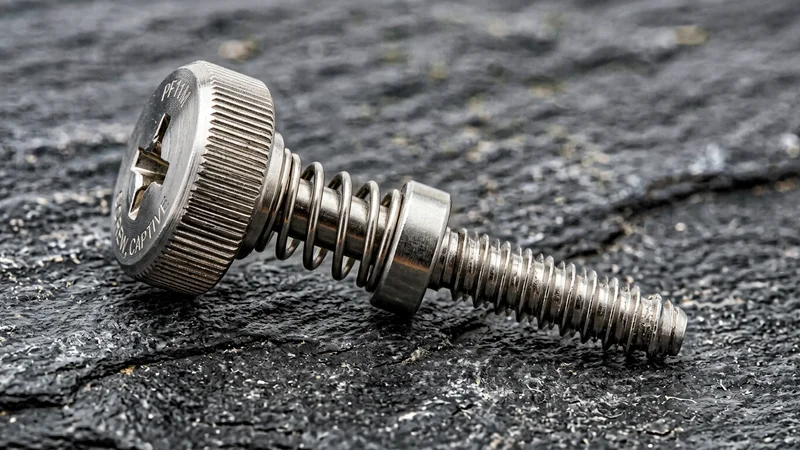
Definition: A captive screw has a reduced-diameter shoulder under the head so it stays attached to a panel or cover when loosened — it cannot fall out and get lost.
Anatomy & Schematic
■ Head■ Shank■ Threads■ Point
Governing standards: Manufacturer specified (no universal standard)
Common Sizes
| Inch | Metric | Head width | Head height |
|---|---|---|---|
| #4-40 | M3 | — | 1/4 to 3/4 long |
| #6-32 | M3.5 | — | 3/8 to 1 long |
| #10-32 | M5 | — | 1/2 to 1-1/4 long |
Representative sizes. Full dimensional data lives in the standards listed below.
Grades & Strength
| Grade | Material | Tensile (psi) | Marking |
|---|---|---|---|
| Stainless steel | stainless steel | — | None |
| Zinc-plated steel | steel | — | None |
Materials
- Stainless steel
- Zinc-plated steel
- Aluminum
Pros & Cons
Pros
- Never lost or dropped
- Fast panel access
- Looks professional
Cons
- Costs more than a plain screw
- Needs a captive shoulder or retainer
- Must match panel thickness
Typical Uses
- Electronics enclosures
- Server racks
- Covers and access panels
- Medical and lab equipment
Alternatives & Related
- Machine Screw — Plain screw where retention does not matter
- Thumb Screw — Tool-free panel access
Where to Buy
Affiliate links — we may earn a commission at no cost to you.
FAQ
What is a captive screw?
A screw with a reduced shoulder or retainer that keeps it attached to a panel even when fully loosened, so it cannot be dropped or lost.
How does a captive screw stay in the panel?
A smaller-diameter shoulder below the head threads into the panel, or a spring or snap ring retains the screw in a ferrule.