Heat-Set Insert
Threaded Inserts · heat insert · brass threaded insert · thermal insert
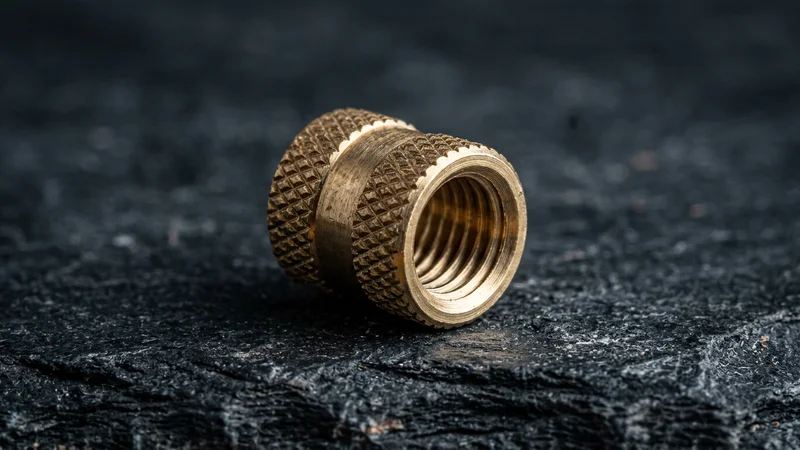
Definition: A heat-set insert is a knurled brass (or stainless) insert pressed into thermoplastics with heat, giving 3D-printed and molded parts a strong, reusable metal thread.
Anatomy & Schematic
■ Body■ Internal thread
Governing standards: Manufacturer specified (no universal standard)
Common Sizes
| Inch | Metric | Head width | Head height |
|---|---|---|---|
| #4-40 | M2.5 | 4.0 OD | 3–4 long |
| #8-32 | M4 | 6.0 OD | 4–6 long |
| #10-32 | M5 | 7.0 OD | 5–8 long |
Representative sizes. Full dimensional data lives in the standards listed below.
Grades & Strength
| Grade | Material | Tensile (psi) | Marking |
|---|---|---|---|
| Brass | brass | — | Standard |
| Stainless | stainless steel | — | For higher loads / chemicals |
Materials
- Brass
- Stainless steel
Pros & Cons
Pros
- Strong reusable thread in plastic
- Fast with a soldering iron or press
- Knurls resist pull-out and rotation
Cons
- Needs the right hole size and temperature
- Melts thin walls if overheated
- One chance — removal is destructive
Typical Uses
- 3D-printed parts (PLA, ABS, PETG, nylon)
- Injection-molded enclosures
- Prototype hardware
Alternatives & Related
- Helical Insert — Thread repair in metal, not plastic
- Rivet Nut — Threads in thin sheet metal
Where to Buy
Affiliate links — we may earn a commission at no cost to you.
FAQ
How do you install a heat-set insert?
Print or drill a hole to the recommended diameter, heat the insert with a soldering iron to just below the plastic melt point, and press it in straight until flush.
Brass or stainless heat-set insert?
Brass is the standard — easy to heat and install. Stainless is stronger and chemical-resistant but needs more care to set without melting the part.