Rivet Nut
Nuts · nutsert · blind rivet nut · threaded insert
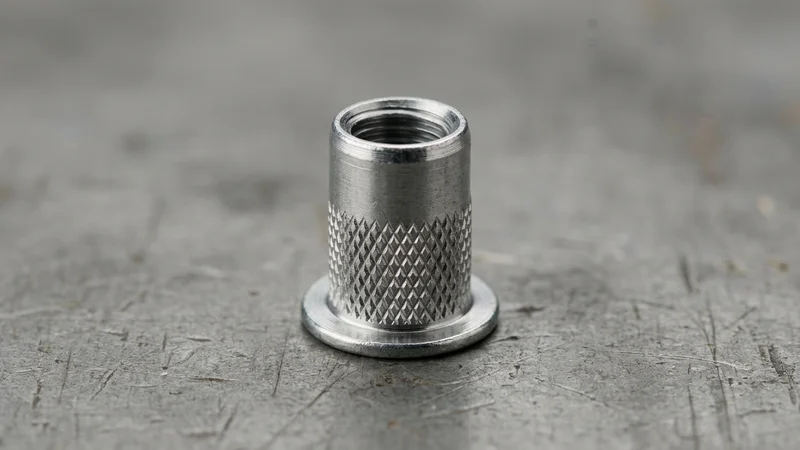
Definition: A rivet nut (Nutsert) is an internally threaded rivet installed from one side, giving thin materials a strong, reusable machine thread.
Anatomy & Schematic
■ Body■ Internal thread
Governing standards: IFI 114 · IFI 116
Common Sizes
| Inch | Metric | Head width | Head height |
|---|---|---|---|
| #8-32 | M4 | 0.34 | 0.02–0.12 grip |
| 1/4-20 | M6 | 0.44 | 0.03–0.20 grip |
| 3/8-16 | M10 | 0.63 | 0.03–0.25 grip |
Representative sizes. Full dimensional data lives in the standards listed below.
Grades & Strength
| Grade | Material | Tensile (psi) | Marking |
|---|---|---|---|
| Steel | zinc-plated carbon steel | — | None |
| Stainless | 304 stainless | — | None |
| Aluminum | 6061 aluminum | — | None |
Materials
- Zinc-plated steel
- Stainless steel
- Aluminum
Pros & Cons
Pros
- Installs from one side only
- Provides a strong reusable thread in thin stock
- No heat or welding required
Cons
- Requires a setting tool or rivet-nut gun
- Limited grip range per size
- Can spin in the hole if over-torqued
Typical Uses
- Thin sheet metal and tubing
- Automotive panels
- Furniture and enclosures
- Adding threads to plastic and composites
Alternatives & Related
- Weld Nut — Permanent threaded insert in steel, but needs welding
- Helical Insert — Thread repair/reinforcement in an existing hole
Where to Buy
Affiliate links — we may earn a commission at no cost to you.
FAQ
What is a rivet nut used for?
It creates a threaded hole in thin materials you can only reach from one side — sheet metal, tubing, enclosures — so a bolt or machine screw can be fastened into it.
Do I need a special tool for rivet nuts?
Yes. A rivet-nut setting tool (manual lever or powered) pulls the body to bulge it behind the panel. Small sizes can be set with a bolt and nut in a pinch.