Concrete Nail
Nails & Construction Fasteners · masonry nail · hardened nail · cut masonry nail
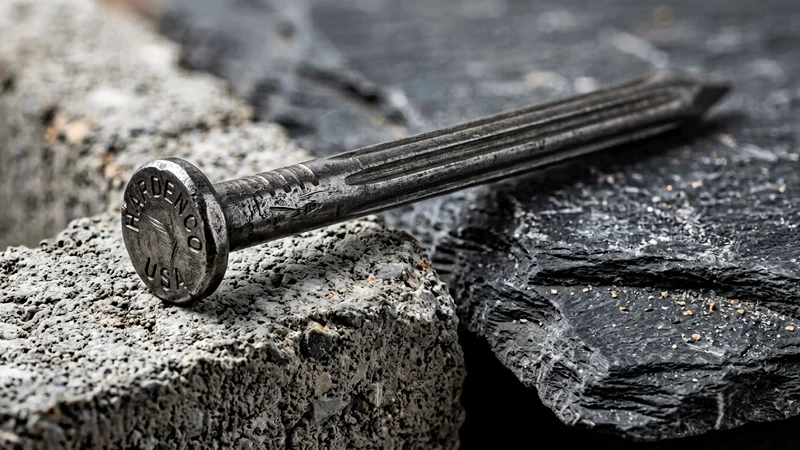
Definition: A concrete nail is a hardened steel nail driven directly into concrete, block, or brick with a hammer to fasten furring, brackets, and light fixtures.
Anatomy & Schematic
■ Head■ Shank■ Point
Governing standards: Manufacturer specified (hardened steel)
Common Sizes
| Inch | Metric | Head width | Head height |
|---|---|---|---|
| 3/4 in | — | — | — |
| 1-1/4 in | — | — | — |
| 2-1/2 in | — | — | — |
Representative sizes. Full dimensional data lives in the standards listed below.
Grades & Strength
| Grade | Material | Tensile (psi) | Marking |
|---|---|---|---|
| Hardened steel | high-carbon steel | — | Drives into concrete |
| Galvanized hardened | zinc-coated steel | — | Damp locations |
Materials
- Hardened steel
- Galvanized hardened steel
Pros & Cons
Pros
- No drilling or anchor needed
- Fast
- Cheap
Cons
- Splits brittle concrete
- Limited holding power
- Hard to remove cleanly
Typical Uses
- Furring strips to block
- Electrical boxes
- Brackets and straps
- Light fixtures in masonry
Alternatives & Related
- Concrete Screw — Removable, higher pull-out
- Hammer-Set Anchor — Nail-in anchor with better grip
- Machine Screw Anchor — Expanding sleeve for heavier loads
Where to Buy
Affiliate links — we may earn a commission at no cost to you.
FAQ
Can you nail into concrete?
Yes — with hardened concrete nails and a heavy hammer. For heavier or removable fixtures, a Tapcon screw or anchor is the better choice.
Concrete nail vs Tapcon?
A concrete nail is driven and permanent; a Tapcon cuts threads and is removable, with more holding power.