Dowel Pin
Pins · parallel pin · locating pin
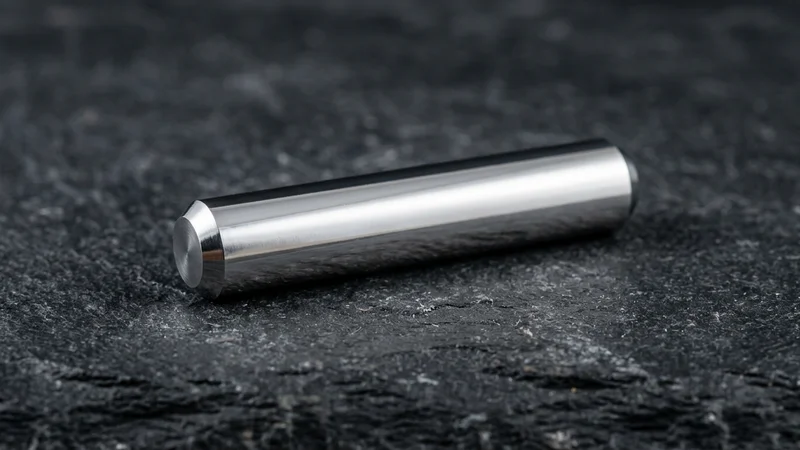
Definition: A dowel pin is a precision-ground, solid cylindrical pin press-fitted into reamed holes to locate two parts exactly or act as a pivot.
Anatomy & Schematic
■ Shank■ Chamfered ends
Governing standards: ASME B18.8.2 · ISO 2338
Common Sizes
| Inch | Metric | Head width | Head height |
|---|---|---|---|
| 1/8 | 3 mm | 0.1250 +.0002 | 3/8–1 |
| 1/4 | 6 mm | 0.2500 +.0002 | 1/2–2 |
| 3/8 | 10 mm | 0.3750 +.0002 | 3/4–3 |
Representative sizes. Full dimensional data lives in the standards listed below.
Grades & Strength
| Grade | Material | Tensile (psi) | Marking |
|---|---|---|---|
| Alloy steel (hardened) | alloy steel, hardened & ground | — | None |
| Stainless | 303 / 316 stainless | — | None |
Materials
- Hardened alloy steel
- Stainless steel 303 / 316
Pros & Cons
Pros
- Extremely precise alignment
- High shear strength
- Hardened for long wear
Cons
- Needs a reamed (sized) hole
- Press fit makes removal difficult
- No retention — can walk out under vibration
Typical Uses
- Precision locating of machine parts
- Alignment in dies and fixtures
- Pivot axles in mechanisms
Alternatives & Related
- Spring Pin — Tolerates rougher holes and absorbs shock
- Clevis Pin — Removable pivot retained with a cotter pin
Where to Buy
Affiliate links — we may earn a commission at no cost to you.
FAQ
Dowel pin vs spring pin?
A dowel pin is solid, precise, and press-fit into a reamed hole for accurate location. A spring pin is hollow, compresses to fit a rougher hole, and absorbs shock.
How do you remove a dowel pin?
Drive it out from the back side with a pin punch, or use a slide hammer for blind holes. Heating the surrounding part can help free a seized pin.