Drive Rivet vs. Pop Rivet
Both rivets set from one side of the work, but they get there differently: a drive rivet is hammered home — the pin wedges the body apart as you drive it flush — while a pop (blind) rivet needs a rivet gun that pulls and snaps the stem. Hammer versus gun is the real choice; everything else follows from it.
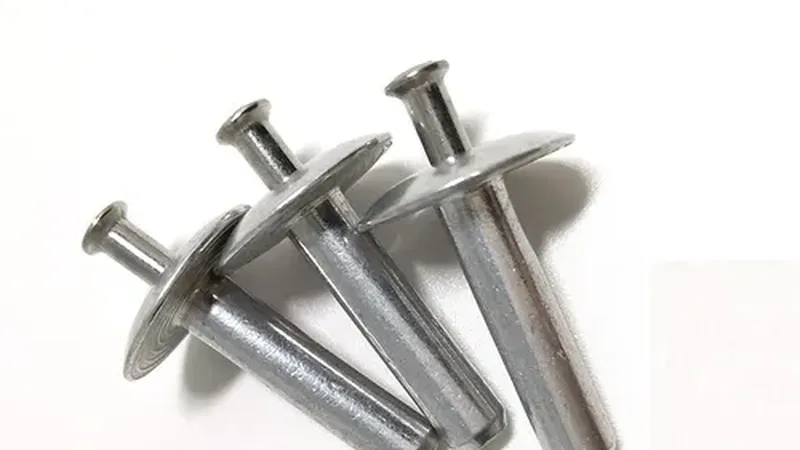
| Feature | Drive Rivet | Pop Rivet |
|---|---|---|
| Setting tool | Any hammer — no special tool | Rivet gun (hand, lever, or pneumatic) |
| Setting shock | Hammer blows transmit through the work | Squeeze action — nearly shock-free |
| Finished look | Pin driven flush, small center mark | Stem snaps inside; open hole on the blind side |
| Clamp control | By feel — easy to overdrive in soft sheet | Stem breaks at a set load — consistent clamp |
| Standard sizes | Common in 1/8 in and 5/32 in bodies | Full range: 3/32 in to 1/4 in, many grips |
| Speed per rivet | Slow — several aimed blows each | Fast — one or two squeezes |
| Vibration resistance | Good — wedged pin resists loosening | Good — but open-end stems can rattle free |
| Best for | Field repairs, nameplates, no-tool situations | Production sheet work, gutters, ducting |
Verdict
Shop This Comparison
- Drive rivet assortment (aluminum) — the hammer-set side
- Pop rivet assortment with hand riveter — the gun-set side
Affiliate links — we may earn a commission at no cost to you.
Also in the toolbox
- Ball-peen hammer — sets drive rivets
- Hand rivet gun kit — sets pop rivets
FAQ
Can you set drive rivets without a rivet gun?
Yes — that is their entire purpose. Push the rivet through the hole and hammer the pin until it seats flush; the pin wedges the body apart and locks the joint. No gun, no compressor, no batteries — just a hammer and a bucking surface behind thin work.
What are standard pop rivet sizes?
Body diameters of 3/32 in, 1/8 in, 5/32 in, 3/16 in, and 1/4 in, each in a ladder of grip lengths for different material stacks. The 1/8 in rivet covers most homeowner sheet-metal work; step up to 3/16 in for gutters, trailers, and anything structural in thin stock.
Are drive rivets strong?
Moderately — comparable to a pop rivet of the same diameter in shear, with good vibration resistance from the wedged pin. Their limit is clamp consistency: an overdriven pin crushes soft sheet, an underdriven one leaves a loose joint. For critical work, the pop rivet’s break-stem consistency wins.
Pop rivet vs. drive rivet for sheet metal — which is better?
Pop rivets for shop work: faster, consistent, and available in every size and grip. Drive rivets for field work where you have no gun. Either way, match the rivet alloy to the sheet — aluminum rivets in steel sheet corrode — and always drill the manufacturer’s specified hole size.