Keps Nut vs. Nylon Lock Nut
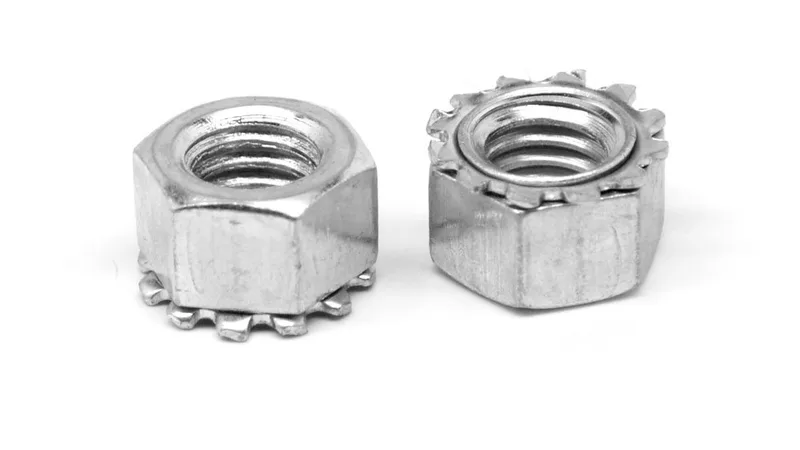
Both fight vibration loosening without threadlocker — a Keps nut spins on fast with a captive tooth washer and bites through paint for grounding, while a nylon lock nut grips the threads with a nylon collar and holds tighter under sustained shake.
| Feature | Keps Nut | Nylon Lock Nut |
|---|---|---|
| Locking method | Tooth washer spins free, bites on seating | Nylon collar squeezes the threads (prevailing torque) |
| Vibration hold | Good — teeth resist rotation | Excellent — the vibration standard |
| Run-down speed | Fast — zero drag until seated | Slow — drag the whole way down |
| Reuse | Once or twice — teeth flatten | Several cycles — nylon rebounds |
| Temperature | All-metal — engine bay and exhaust OK | Nylon softens above about 250°F (121°C) |
| Electrical grounding | Yes — teeth bite through paint to bare metal | No — nylon insulates |
| Cost | Cheapest locking nut per piece | Slightly more |
| Best for | High-volume assembly, panels, grounding lugs | Wheels, engines, machinery that shakes |
Verdict
Shop This Comparison
- Keps nut assortment (zinc) — the production side
- Nylon lock nut assortment — the vibration-proof side
Affiliate links — we may earn a commission at no cost to you.
FAQ
What is a Keps nut?
A K-lock nut: a standard hex nut with a captive external-tooth washer that spins freely until seating, then bites to resist loosening. One piece, fast run-down, no threadlocker.
Can you reuse a nylon lock nut?
A few times, yes. The nylon collar rebounds enough for several cycles — replace the nut as soon as it spins onto clean threads without drag, because the locking grip is gone.
What temperature destroys a nylock nut?
Nylon softens above about 250°F (121°C) and melts not far beyond. Near exhausts, ovens, or engine heat, switch to an all-metal prevailing-torque nut or a Keps nut.
Why use Keps nuts for grounding?
The washer teeth cut through paint and powder-coat to bare metal as the nut seats, making a gas-tight electrical bond. That is why panel shops and lug manufacturers specify them.