Lock Nut
Nuts · nyloc nut · nylon insert lock nut · prevailing torque nut
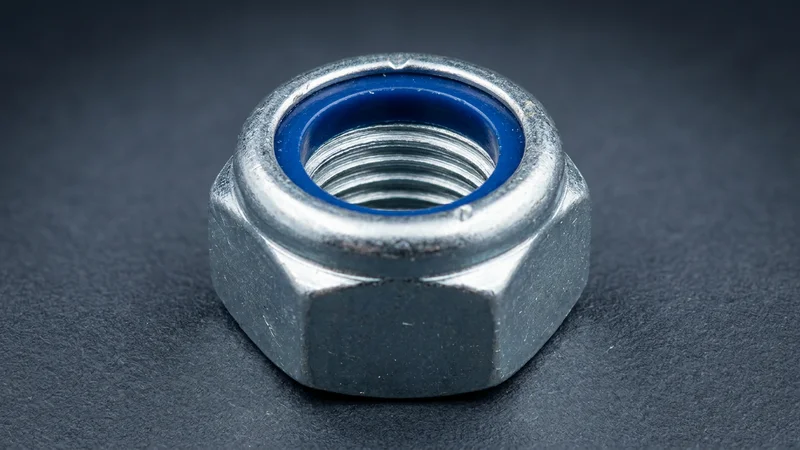
Definition: A lock nut resists loosening from vibration using a nylon insert, deformed threads, or a second locking element that increases friction on the bolt thread.
Anatomy & Schematic
■ Body■ Internal thread
Governing standards: ASME B18.2.2 · DIN 985 · ISO 7040
Common Sizes
| Inch | Metric | Head width | Head height |
|---|---|---|---|
| 1/4-20 | M6 x 1.0 | — | — |
| 3/8-16 | M10 x 1.5 | — | — |
| 1/2-13 | M12 x 1.75 | — | — |
Representative sizes. Full dimensional data lives in the standards listed below.
Grades & Strength
| Grade | Material | Tensile (psi) | Marking |
|---|---|---|---|
| Grade 5 equivalent | medium carbon steel + nylon insert | — | 3 radial lines |
| Grade 8 equivalent | alloy steel + nylon insert | — | 6 radial lines |
Materials
- Zinc-plated steel with nylon insert
- Stainless steel with nylon insert
- All-metal prevailing torque (deformed thread)
Pros & Cons
Pros
- Resists vibration loosening without a separate washer
- Reusable for a limited number of cycles
- One-piece convenience
Cons
- Nylon insert is temperature-limited (about 250 °F)
- Higher installation torque than a plain nut
- All-metal types can gall or damage threads
Typical Uses
- Vibration-prone assemblies
- Automotive and machinery
- Outdoor equipment and trailers
Alternatives & Related
- Hex Nut — For static joints where vibration is not a concern
- Flat Washer — Spreads clamp load under the nut
Where to Buy
Affiliate links — we may earn a commission at no cost to you.
FAQ
Are nyloc nuts reusable?
Yes, but the nylon insert wears with each cycle and locking effectiveness declines. For critical joints, use a fresh nut each time.
Can lock nuts be used with stainless bolts?
Yes — match materials to avoid galvanic corrosion, and use a stainless nyloc with a stainless bolt outdoors.