Speed Nut
Nuts · spring steel nut · u-nut · flat speed nut · panel nut
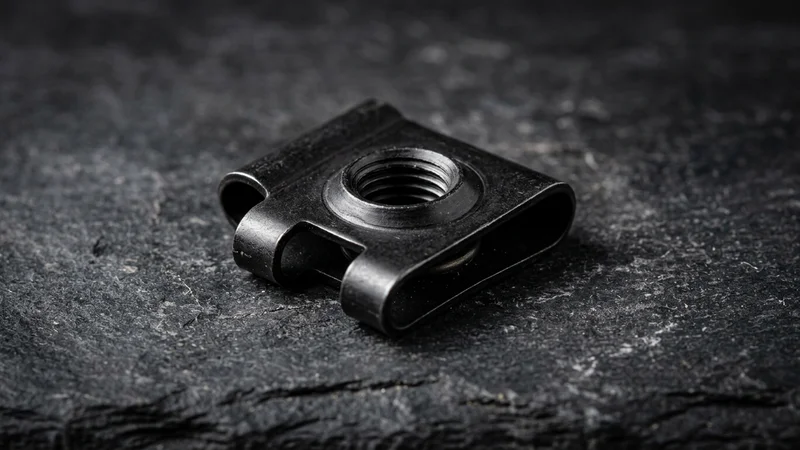
Definition: A speed nut is a stamped spring-steel fastener that pushes over a panel edge or stud, self-retaining and ready to receive a screw without a wrench.
Anatomy & Schematic
■ Body■ Internal thread
Governing standards: Manufacturer specified (no universal standard)
Common Sizes
| Inch | Metric | Head width | Head height |
|---|---|---|---|
| #8 | M4 | — | for 0.03–0.06 panel |
| #10 | M5 | — | for 0.03–0.09 panel |
| 1/4 | M6 | — | for 0.06–0.12 panel |
Representative sizes. Full dimensional data lives in the standards listed below.
Grades & Strength
| Grade | Material | Tensile (psi) | Marking |
|---|---|---|---|
| Spring steel | spring steel, zinc-plated | — | None |
| Stainless | spring stainless | — | None |
Materials
- Spring steel (zinc-plated)
- Stainless spring steel
Pros & Cons
Pros
- No wrench needed — clips in place
- Ideal where the back side is inaccessible
- Fast on assembly lines
Cons
- Low strength — light duty only
- Tines wear if reused often
- Size must match the panel thickness
Typical Uses
- Automotive trim and panels
- Appliance assembly
- Sheet-metal edges
- Blind fastening to panels
Alternatives & Related
Where to Buy
Affiliate links — we may earn a commission at no cost to you.
FAQ
What is a speed nut used for?
Fastening screws to sheet-metal panels and edges where you cannot reach the back — automotive trim and appliance covers are classic uses.
How does a speed nut work?
The spring-steel body clips over the panel edge and its tines align with the screw hole; the screw then threads into the tines.