Detent Pin vs. Clevis Pin
Both make separable pivot joints, but they retain themselves differently: a detent pin locks with spring-loaded balls (or a push button) built into the shaft, while a plain clevis pin needs a separate cotter pin through its cross-hole. Pay for the detent when the joint comes apart daily; save the money when it comes apart yearly.
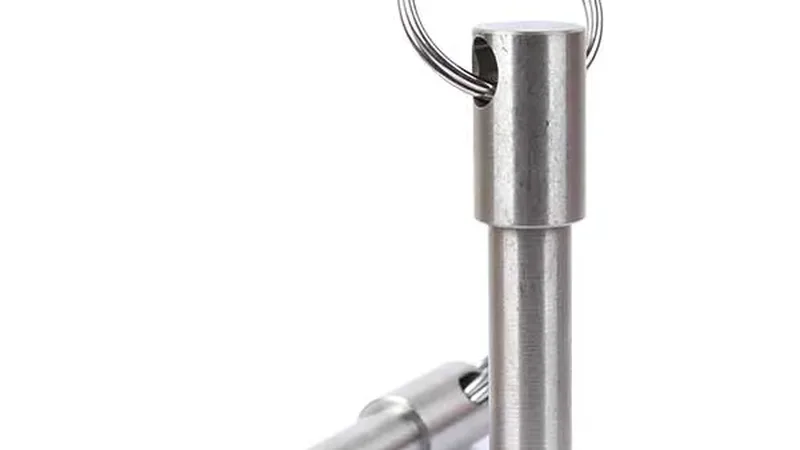
| Feature | Detent Pin | Clevis Pin |
|---|---|---|
| Retention | Spring balls or button built into the shaft | Separate cotter pin through a cross-hole |
| Loose parts | None — self-contained | Cotter pin to drop, lose, and replace |
| Removal speed | Seconds — push and pull | Minutes — straighten, pull cotter, then pin |
| One-handed operation | Yes, with button or ring handle | No — needs two hands and pliers |
| Shear strength | Good, but balls reduce bearing area slightly | Full-shaft strength, the stronger joint |
| Wear life | Balls and springs wear with heavy cycling | Nearly indefinite — a plain steel shaft |
| Cost | Higher — precision mechanism in every pin | Lower — pennies of turned steel plus a cotter |
| Best for | Fixtures, jigs, gym equipment, frequent changeovers | Hitches, linkages, and joints that stay assembled |
Verdict
Shop This Comparison
- Detent pin assortment (button head) — the quick-release side
- Clevis pin assortment with cotters — the economical side
Affiliate links — we may earn a commission at no cost to you.
Also in the toolbox
- Needle-nose pliers — for the cotter side
- Lanyard cable kit — tethers detent pins to the frame
FAQ
What is a detent pin?
A quick-release pin with spring-loaded balls (or a push-button mechanism) near its tip that snap out behind the hole and lock the pin in place. Push the button or just pull firmly, the balls retract, and the pin slides out — no cotter pin, no tools.
Detent pin vs. clevis pin — which should I use?
Use a detent pin when the joint comes apart often and loose cotter pins would get lost — fixtures, adjustable frames, and gym equipment. Use a plain clevis pin when the joint stays assembled: it is cheaper, stronger in shear, and has no mechanism to wear out.
Do detent pins wear out?
Eventually, yes — the spring balls and their pockets wear with heavy cycling, especially in gritty environments. A detent that pulls out too easily has told you it is done. Plain clevis pins have no moving parts and effectively last forever.
Can a detent pin replace a cotter-pinned clevis?
Usually, yes, as long as the diameter and grip length match the hole and stack. Check shear ratings first — the ball pockets slightly reduce the detent pin’s capacity — and avoid the swap on safety-critical hitches where a positive cotter is specified.