Detent Pin
Pins · ball lock pin · quick release pin · ball detent pin
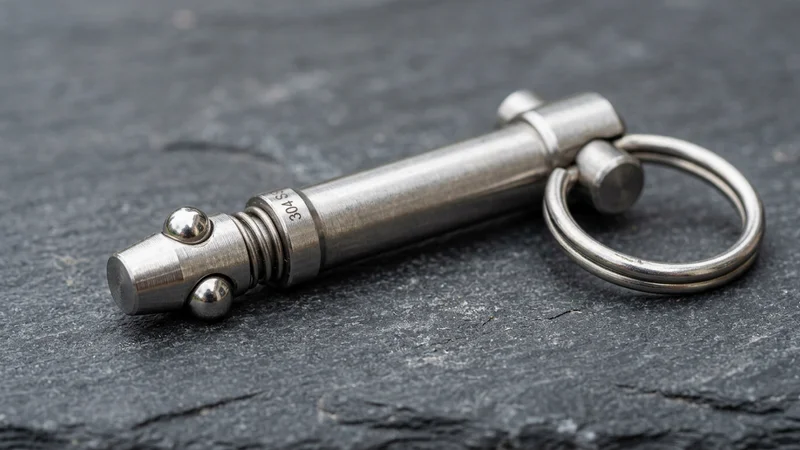
Definition: A detent pin has spring-loaded balls near the tip that lock it into a hole; pressing the button retracts the balls so the pin can be pulled free.
Anatomy & Schematic
■ Shank■ Chamfered ends
Governing standards: Manufacturer specified (no universal standard)
Common Sizes
| Inch | Metric | Head width | Head height |
|---|---|---|---|
| 1/4 | 6 mm | usable 1–4 | 1/4 dia |
| 3/8 | 10 mm | usable 1–5 | 3/8 dia |
| 1/2 | 12 mm | usable 1–6 | 1/2 dia |
Representative sizes. Full dimensional data lives in the standards listed below.
Grades & Strength
| Grade | Material | Tensile (psi) | Marking |
|---|---|---|---|
| Steel | carbon steel, zinc-plated | — | None |
| Stainless | stainless steel | — | None |
Materials
- Zinc-plated steel
- Stainless steel
Pros & Cons
Pros
- One-hand, tool-free operation
- Positive ball lock
- Very fast cycle times
Cons
- Balls wear over time
- Not for high sustained shear
- Needs the hole to match closely
Typical Uses
- Jigs and fixtures
- Adjustable equipment
- Quick-change tooling
- Locking mechanisms
Alternatives & Related
- Hitch Pin — Simpler clip-retained pin
- Clevis Pin — Permanent-headed pin with cotter pin
Where to Buy
Affiliate links — we may earn a commission at no cost to you.
FAQ
How does a detent pin work?
Spring-loaded balls near the tip seat in the bore and hold the pin. Press the button and the balls retract so the pin slides out.
Detent pin vs clevis pin?
A detent pin locks itself with balls and needs no cotter pin; a clevis pin requires a separate cotter pin to stay in place.