Grooved Pin
Pins · groove pin · 3-groove pin · three groove pin
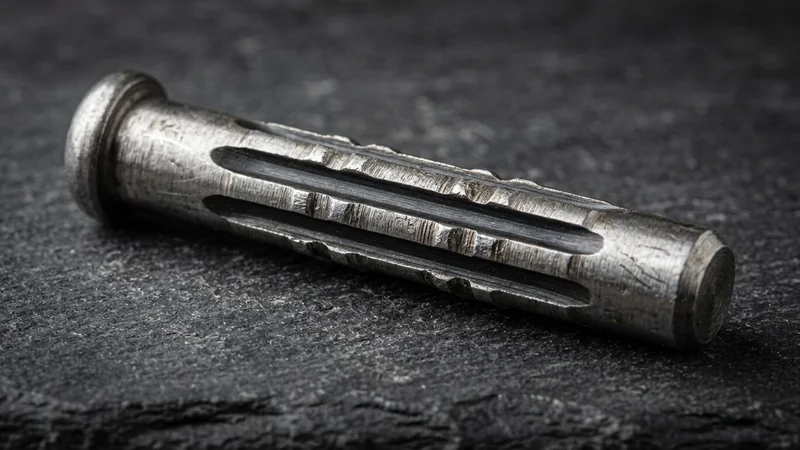
Definition: A grooved pin has longitudinal grooves swaged into its surface that displace material as it is pressed in, so the pin retains itself in a plain drilled hole.
Anatomy & Schematic
■ Shank■ Chamfered ends
Governing standards: ASME B18.8.2
Common Sizes
| Inch | Metric | Head width | Head height |
|---|---|---|---|
| 1/8 | 3 mm | 0.125 | 1/2–1-1/2 |
| 3/16 | 5 mm | 0.1875 | 3/4–2 |
| 1/4 | 6 mm | 0.250 | 1–3 |
Representative sizes. Full dimensional data lives in the standards listed below.
Grades & Strength
| Grade | Material | Tensile (psi) | Marking |
|---|---|---|---|
| Steel | carbon steel | — | None |
| Stainless | 304 stainless | — | None |
Materials
- Carbon steel
- Stainless steel 304
Pros & Cons
Pros
- Self-retaining in a plain drilled hole
- No reaming needed
- Solid — strong in shear
Cons
- Grooves wear the hole with repeated use
- Needs a press or hammer to install
- Less common than dowel pins
Typical Uses
- Hinges and levers
- Handles and knobs
- Shear pin applications
- General retention
Alternatives & Related
- Dowel Pin — Precise press-fit locating pin
- Spring Pin — Hollow pin that absorbs shock
Where to Buy
Affiliate links — we may earn a commission at no cost to you.
FAQ
Grooved pin vs dowel pin?
A grooved pin retains itself in a plain drilled hole because its raised grooves bite the walls; a dowel pin needs a reamed hole and a press fit.
How do you install a grooved pin?
Line it up with a drilled hole and press or tap it in. The grooves displace material and lock the pin in place.