Cotter Pin vs. Clevis Pin
These two are companions, not rivals: the clevis pin is the headed shaft that carries the shear load through a linkage, and the cotter pin is the folded wire clip through its cross-hole that keeps it from walking out. Size the clevis for the load, size the cotter for the hole — and never ask the little wire clip to carry weight.
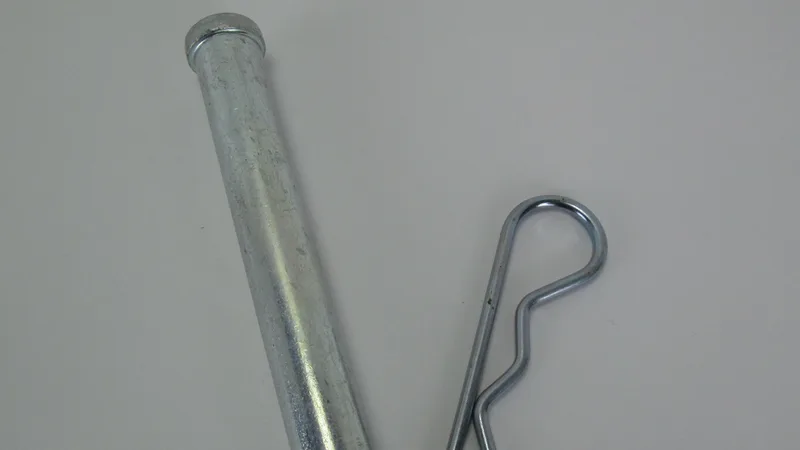
| Feature | Cotter Pin | Clevis Pin |
|---|---|---|
| Function | Retainer — locks the clevis in place | Load bearer — the pivot shaft itself |
| Carries load? | No — shear on a cotter pin is a failure | Yes — rated in single and double shear |
| Form | Doubled spring wire with bent legs | Headed, unthreaded shaft with cross-hole |
| Sizing rule | Wire diameter matches the cross-hole; length covers the shaft plus legs | Diameter matches the linkage bore; grip matches the stack width |
| Standard sizes | Wire from 1/32 in up to 1/2 in, many lengths | Diameters 1/8 in to 2 in-plus, grip in 1/8 in steps |
| Installation | Push through, spread the legs around the shaft | Slide through the linkage, pin the hole |
| Reusable? | No — bending work-hardens the legs; always fit new | Yes — inspect the hole and shaft, reuse freely |
| Used with | Clevis pins, castle nuts, slotted nuts | Clevises, turnbuckles, hitches, linkages |
Verdict
Shop This Comparison
- Cotter pin assortment (zinc) — fresh retainers, every size
- Clevis pin assortment with cotters — the pivot side
Affiliate links — we may earn a commission at no cost to you.
Also in the toolbox
- Needle-nose pliers — spreads cotter legs neatly
- Digital caliper — gauges bore and grip
FAQ
What is the difference between a cotter pin and a clevis pin?
The clevis pin is the load-bearing shaft that joins a linkage; the cotter pin is the small wire clip through the hole in its end that stops it sliding out. One carries the force, the other just keeps the first one home.
What size cotter pin fits my clevis pin?
Match the cotter wire diameter to the cross-hole — typically the largest wire that slides through freely — and choose a length at least the shaft diameter plus enough leg to wrap around it. Cotter assortments list the hole range on the lid; when between sizes, go up in length, never down in wire.
Are cotter pins reusable?
Not reliably. Spreading and straightening the legs work-hardens the wire, and a fatigued leg can snap off in service and let the clevis walk out. Cotters cost pennies — fit a new one every time the joint is reassembled.
What is a clevis pin used for?
Quick pivot joints in linkages, turnbuckles, hitches, pulleys, and farm implements — anywhere a shaft must carry shear but still come apart for service. The head stops one end, the cotter pin stops the other, and the joint assembles in seconds with no threads.