How to Hang Garage Storage (Hooks & Rails for Bikes + Ladders)
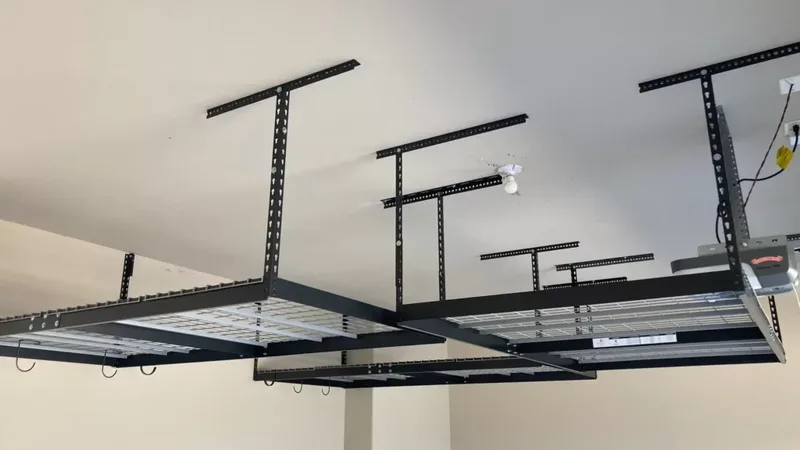
Weigh everything before you hang anything: e-bikes run 50–70 lb, extension ladders 40–75 lb, loaded bins 30 lb each — add it up per wall section and spec anchors rated for double that. Garage storage fails happen in the middle of the night, loudly, onto car hoods.
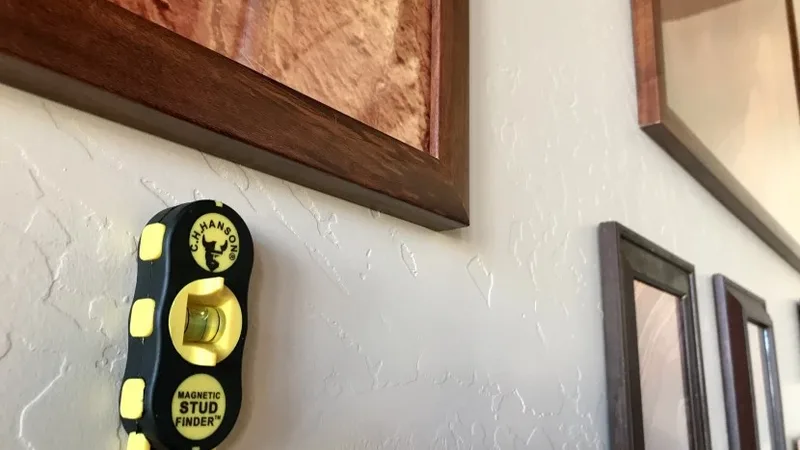
Hang rails and heavy hooks into studs wherever possible: 1/4 in lag bolts or #14 structural screws, 2-1/2 to 3 in long, two per stud crossing. A slatwall panel or rail system concentrates enormous load on a few fasteners, so every one of them must bite solid framing — mark studs edge-to-edge with painter’s tape first.
On bare concrete or block walls, drill for sleeve anchors matched 1:1 to the hole diameter and torque to spec — the sleeve swells along its full length instead of bursting the block like a wedge anchor can. One 3/8 in sleeve anchor per stud-equivalent position carries bikes and ladders with margin to spare.
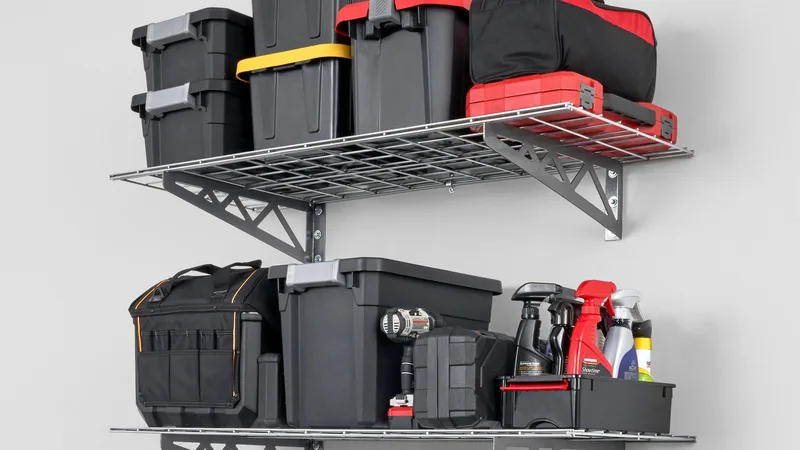
For drywall-only stretches, bridge with snap toggles rated 1.5 times the planned load: 1/2 in holes, channels flat behind the board, collars tight before snapping straps. Toggles carry light rails, bins, and hand tools beautifully — but keep bikes and ladders on studs or masonry, full stop.
Choose rail-and-hook systems over fixed single hooks for anything you grab weekly: rails spread load across many fasteners and let hooks slide as the gear changes with the seasons. Fixed J-hooks are fine for the ladder that never moves; everything else earns rails.
Load-test every section with 1.5 times its working weight, then tug each hook downward and outward the way gravity plus a hurried kid will. Re-torque lag bolts after the first month as lumber seasons — and strap tall shelving to studs so a bumped shelf cannot walk off the wall.