J-Bolt vs. Anchor Bolt
Every J-bolt is an anchor bolt, but not every anchor bolt is a J-bolt: the J is the bent-tail subset cast into wet concrete for light work, while headed and L-shaped anchor bolts cover everything up to structural-steel columns. The tail shape decides how much pull-out the concrete can develop before the bolt lets go.
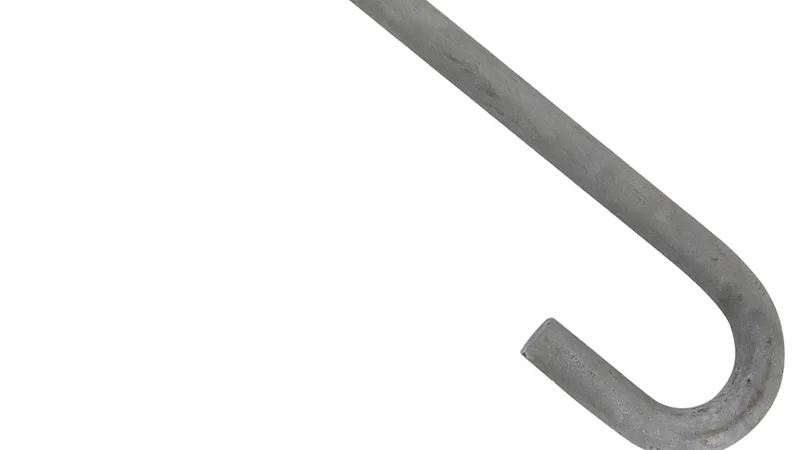
| Feature | J-Bolt | Anchor Bolt |
|---|---|---|
| Tail shape | Hooked J-bend keys into the concrete | Headed, L-bend, or plate-and-nut assemblies |
| How it resists pull-out | Bearing of the hook against concrete — limited area | Head or plate bearing over a much larger area |
| Load range | Light to medium: sills, posts, small equipment | Light to heavy: up to Grade 105 column bases |
| Material grades | Usually A307 or F1554 Grade 36 (mild steel) | F1554 Grades 36, 55, and 105 by design |
| Embedment depth | Short — hook develops quickly in shallow pours | Engineered per ACI 318 Appendix D calculations |
| Seismic / structural use | Generally not permitted for primary structure | Required form for braced frames and columns |
| Installation timing | Set before the pour — position must be exact | Cast-in-place, same constraint; templates common |
| Best for | Mud sills, deck posts, signs, and light machinery | Structural steel, heavy machines, and anything engineered |
Verdict
Shop This Comparison
- J-bolt assortment (zinc) — the sill-and-post side
- F1554 anchor bolt kit with templates — the structural side
Affiliate links — we may earn a commission at no cost to you.
Also in the toolbox
- Rotary hammer drill — for post-installed alternatives
- Torpedo level + string line — sets cast-in bolts plumb
FAQ
What is the difference between a J-bolt and an anchor bolt?
A J-bolt is a bent-tail anchor bolt shaped like the letter J; the hook keys into wet concrete for light-to-medium hold-down. Headed and L-shaped anchor bolts use a forged head or plate to develop far higher pull-out, and they come in engineered grades (F1554 36/55/105) for structural work.
When should I use a J-bolt?
For mud sills, deck and fence posts, mailboxes, signs, and small stationary equipment — anything where the loads are modest and the concrete pour is shallow. They are cheap, set fast, and hold far more than wood framing will ever demand of them.
Can J-bolts be used for structural columns?
No. Column bases need headed anchor bolts sized by calculation, usually F1554 Grade 55 or 105, with embedment depths a J-hook cannot match. Using J-bolts under primary structure will fail inspection in most jurisdictions.
What if my cast-in J-bolt is in the wrong spot?
Cut it flush and switch to a post-installed anchor — a wedge anchor or sleeve anchor drilled into the cured concrete — rather than bending the J-bolt over. Bent anchor bolts lose capacity and most inspectors reject them on sight.