Self-Tapping Insert
Threaded Inserts · self tapping threaded insert · self threading insert · tapping insert
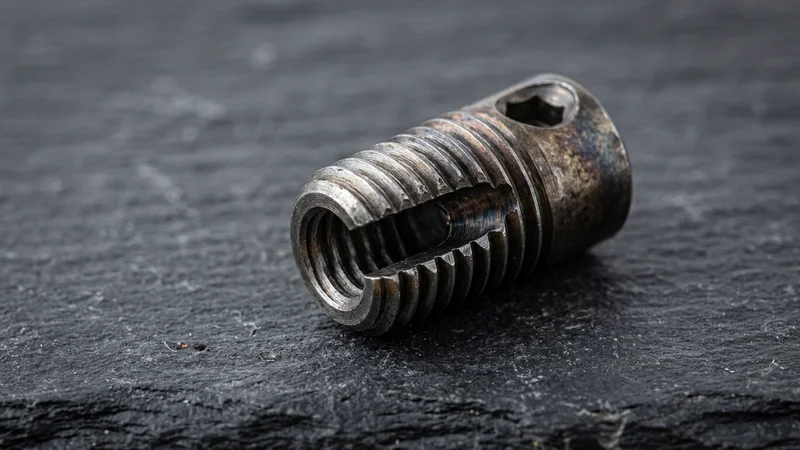
Definition: A self-tapping insert has cutting or forming external threads so it taps its own hole in plastic, wood, or soft metal, providing a strong metal thread.
Anatomy & Schematic
■ Body■ Internal thread
Governing standards: Manufacturer specified (no universal standard)
Common Sizes
| Inch | Metric | Head width | Head height |
|---|---|---|---|
| #8-32 | M4 | 0.22 OD | 0.30 long |
| #10-24 | M5 | 0.27 OD | 0.38 long |
| 1/4-20 | M6 | 0.33 OD | 0.44 long |
Representative sizes. Full dimensional data lives in the standards listed below.
Grades & Strength
| Grade | Material | Tensile (psi) | Marking |
|---|---|---|---|
| Brass | brass | — | For plastic/wood |
| Steel | carbon steel | — | For soft metal |
Materials
- Brass
- Carbon steel
- Stainless steel
Pros & Cons
Pros
- No tapping tool needed
- Strong, reusable metal thread
- Works in a plain drilled hole
Cons
- Needs the correct pilot hole size
- Not for very brittle plastics
- Can split thin walls
Typical Uses
- Plastic enclosures
- Wood fixtures
- Soft metals
- Repairing stripped plastic bosses
Alternatives & Related
- Heat-Set Insert — Thermally installed insert for 3D prints
- Helical Insert — Thread repair in metals
Where to Buy
Affiliate links — we may earn a commission at no cost to you.
FAQ
Self-tapping insert vs heat-set insert?
A self-tapping insert cuts its own thread in a drilled hole and works in wood and metal too; a heat-set insert melts into thermoplastics with heat.
What hole size for a self-tapping insert?
Follow the manufacturer chart — the hole is between the insert minor and major diameter so the external threads form cleanly.