Finish Nail
Nails & Construction Fasteners · finishing nail · trim nail · casing nail (small)
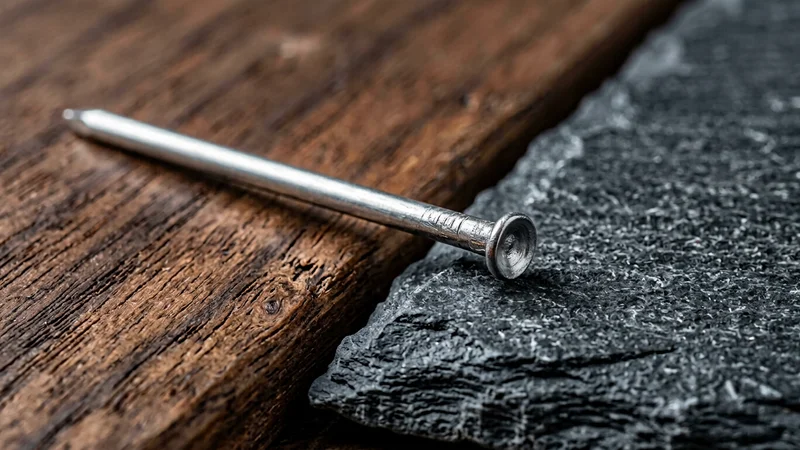
Definition: A finish nail has a small barrel head that is driven below the surface and puttied over, leaving a nearly invisible fastener for trim and cabinetry.
Anatomy & Schematic
■ Head■ Shank■ Point
Governing standards: ASTM F1667
Common Sizes
| Inch | Metric | Head width | Head height |
|---|---|---|---|
| 4d · 1-1/2 in | — | 3/16 | — |
| 6d · 2 in | — | 7/32 | — |
| 8d · 2-1/2 in | — | 1/4 | — |
Representative sizes. Full dimensional data lives in the standards listed below.
Grades & Strength
| Grade | Material | Tensile (psi) | Marking |
|---|---|---|---|
| Bright (plain) | low carbon steel | — | Interior trim |
| Galvanized | zinc-coated steel | — | Exterior trim |
| Stainless | 304/316 stainless | — | Coastal trim |
Materials
- Steel (bright)
- Galvanized steel
- Stainless steel
Pros & Cons
Pros
- Nearly invisible when set and filled
- Less splitting than common nails
- Clean finish
Cons
- Low holding power
- Head can pull through soft trim
- Needs a nail set to sink the head
Typical Uses
- Baseboards and casing
- Crown molding
- Cabinetry
- Furniture
Alternatives & Related
- Brad Nail — Even smaller, 18-gauge, for delicate trim
- Casing Nail — Slightly larger for door and window casing
Where to Buy
Affiliate links — we may earn a commission at no cost to you.
FAQ
How do you set a finish nail?
Drive the head just below the surface with a nail set, then fill the hole with wood putty or filler and sand flush.
Finish nail vs brad nail?
Finish nails are larger (15 or 16 gauge) for trim and casing; brad nails are 18 gauge for delicate work.